
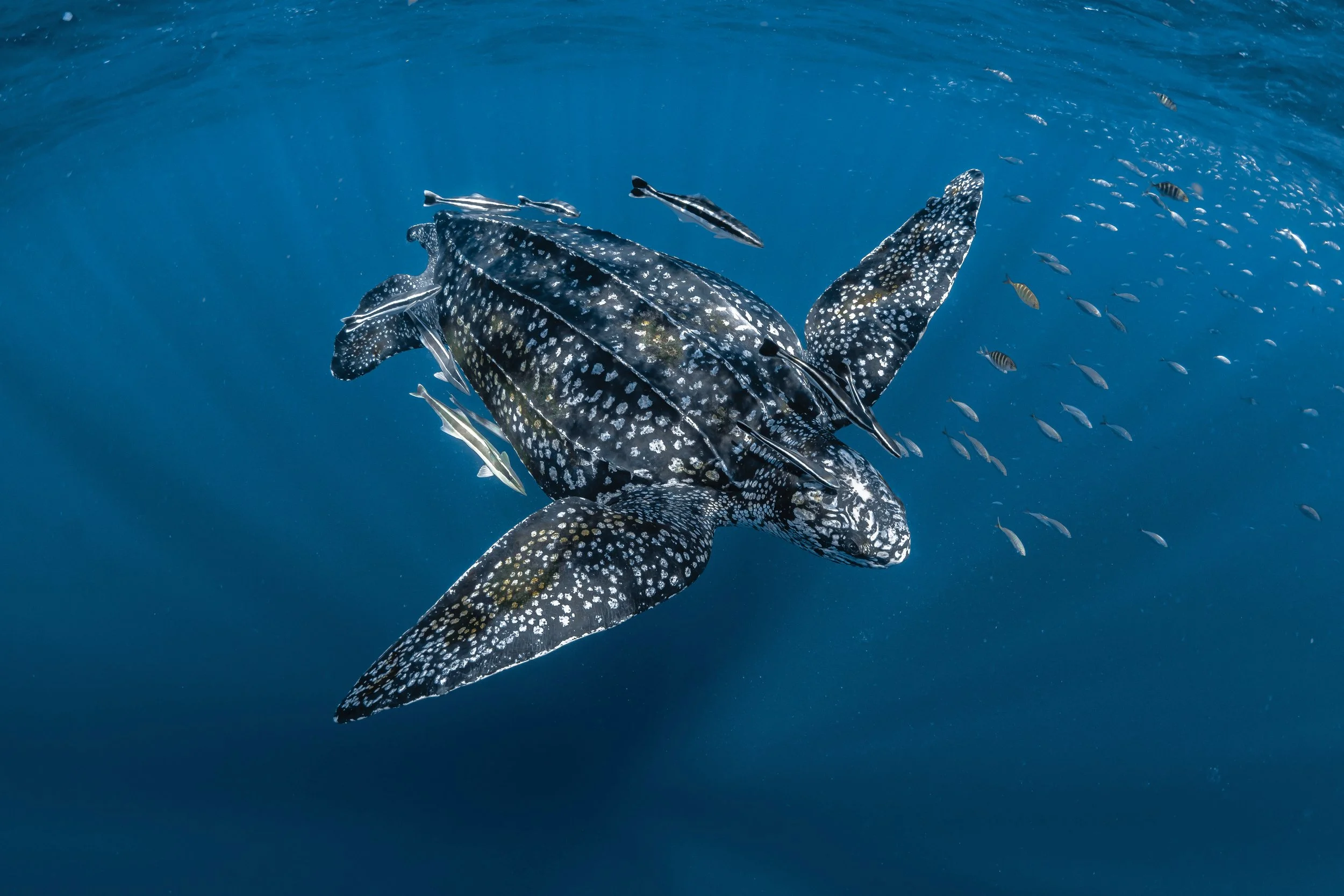
Sea turtles have survived in the world’s oceans for more than 100 million years. They travel thousands of kilometers, dive deep beneath the surface, survive powerful storms, and return to beaches to lay their eggs.
But life in the wild is not easy for these ancient reptiles. From predators and rough seas to changing temperatures and limited food, sea turtles face many challenges throughout their lives.
Their survival depends on a remarkable combination of strong bodies, efficient swimming, camouflage, navigation, feeding adaptations, and natural instincts.

1. Sea Turtles Are Built for Life in the Ocean
Sea turtles have streamlined bodies and large, powerful flippers that help them move efficiently through the water.
Unlike land turtles, they cannot pull their flippers completely inside their shells.
Their bodies are specially adapted for long-distance swimming and life in marine environments.
2. Their Shell Protects Them
A sea turtle’s shell provides important protection.
The hard shell helps defend the turtle against predators and physical impacts.
However, the shell isn’t an impenetrable shield. Young turtles are especially vulnerable to predators.

3. They Can Hold Their Breath for a Long Time
Sea turtles are reptiles, so they must breathe air.
They can hold their breath for extended periods while diving.
The exact duration depends on the species and what the turtle is doing. A resting turtle can generally stay underwater much longer than one that is actively swimming or escaping a predator.
4. Sea Turtles Slow Their Bodies During Long Dives
When a sea turtle dives, its body can conserve oxygen by reducing certain physiological processes.
Its heart rate can slow dramatically, helping preserve oxygen for the organs that need it most.
This allows turtles to remain underwater while searching for food or resting.
5. They Can Dive Deep
Some sea turtles are impressive divers.
Leatherback turtles are particularly capable of deep diving and can descend to depths of more than 1,000 meters in some cases.
Their flexible bodies and specialized physiology help them tolerate pressure changes during deep dives.

6. Different Species Eat Different Foods
Sea turtles have diets adapted to their environments.
Depending on the species, they may eat:
- Seagrass
- Algae
- Jellyfish
- Crabs
- Sponges
- Mollusks
- Other marine animals
This dietary diversity allows different species to occupy different ecological niches.
7. Green Sea Turtles Change Their Diet
Young green sea turtles often eat more animal-based foods.
As they mature, many become primarily herbivorous and feed heavily on seagrasses and algae.
This change in diet helps them take advantage of different food sources at different stages of life.

8. Leatherbacks Have a Special Diet
Leatherback turtles are famous for eating jellyfish and other soft-bodied animals.
Their mouths and throats contain backward-pointing structures that help prevent slippery prey from escaping.
This adaptation allows them to consume large quantities of jellyfish.
9. Their Bodies Help Them Stay Warm
Sea turtles are reptiles and generally depend on environmental temperatures to regulate their body temperature.
However, leatherback turtles have unusual adaptations that help them maintain body temperatures above the surrounding water under many conditions.
Their large size, thick layer of fat, and ability to generate heat through muscle activity all contribute to this ability.
10. They Can Travel Huge Distances
Sea turtles are among the great travelers of the animal world.
Some individuals migrate thousands of kilometers between feeding areas and nesting beaches.
They can cross entire ocean regions while following seasonal food availability and reproductive routes.

11. Sea Turtles Have Excellent Navigation Abilities
One of the greatest mysteries of sea turtles is how they find their way across enormous oceans.
Scientists have strong evidence that turtles can detect Earth’s magnetic field.
This magnetic sense helps them orient themselves and may provide information about their geographic location.
12. Some Return to the Beach Where They Were Born
Female sea turtles often return to the general region where they originally hatched to lay their own eggs.
This remarkable behavior is called natal homing.
Exactly how they accomplish this is complex, but Earth’s magnetic field appears to play an important role.