
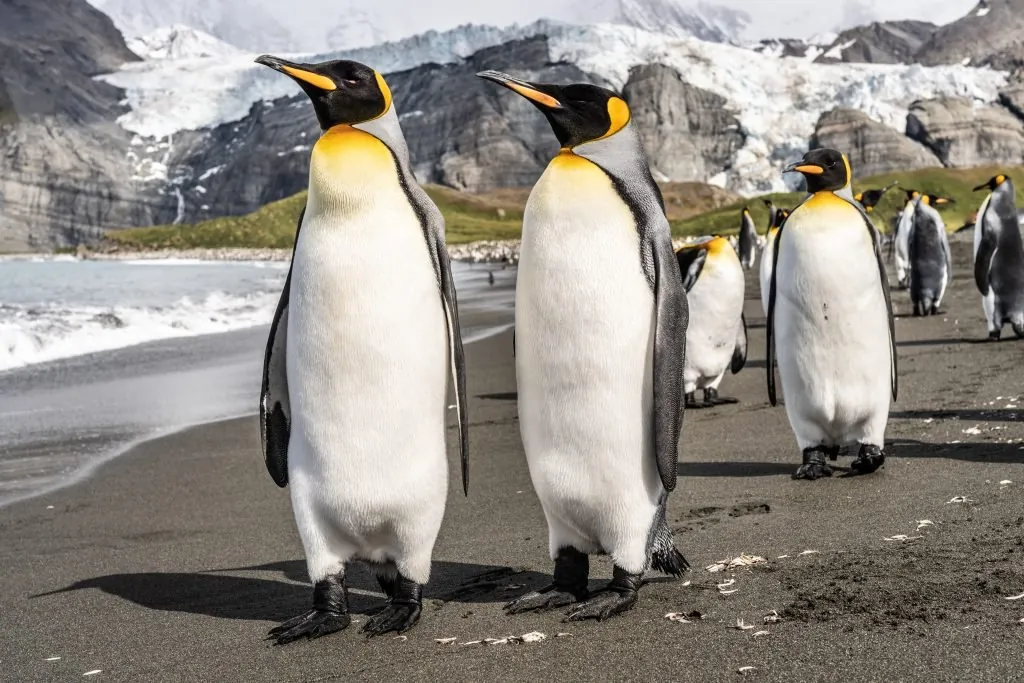
Penguins are some of the most cold-adapted animals on Earth. Emperor penguins, in particular, can survive brutal Antarctic winters when temperatures can fall far below freezing and powerful winds make conditions even more challenging.
Yet these birds can maintain a warm internal body temperature while standing on ice and swimming in freezing water.
Their survival depends on a combination of dense feathers, body fat, specialized blood circulation, body shape, behavior, and social cooperation.

1. Penguins Have Extremely Dense Feathers
One of the penguin’s most important defenses against cold is its feathers.
Penguin feathers are short, stiff, and densely packed.
This creates a layer of trapped air next to the skin, providing excellent insulation.
Their feathers also help keep cold water from reaching the skin directly.
2. Their Feathers Are Waterproof
Penguins spend a large part of their lives in cold water, so staying dry is essential.
They regularly preen their feathers and distribute oil from a gland near the base of their tail.
This helps maintain the water-resistant properties of their plumage.

3. Penguins Have a Layer of Body Fat
Beneath their skin, penguins have a layer of fat called blubber.
This fat acts as insulation, reducing heat loss to the surrounding environment.
It also provides stored energy that can be used when food is unavailable.
For emperor penguins, this energy reserve is especially important during the breeding season.
4. Their Compact Bodies Reduce Heat Loss
Penguins have relatively compact bodies with a shape that helps minimize exposed surface area.
A smaller surface-area-to-volume ratio means less heat is lost compared with a long, thin body of similar mass.
This is one reason larger penguins tend to be better adapted to extreme cold.
5. Emperor Penguins Are Especially Large
Emperor penguins are the largest living penguins.
Their large size helps them retain heat because larger bodies generally lose heat more slowly relative to their volume.
This is particularly valuable in Antarctica, where winter temperatures can become extremely low.

6. Their Feet Have Special Blood Circulation
Penguins need their feet to remain cold enough that they don’t lose excessive body heat while standing on ice.
They have a specialized countercurrent heat exchange system in their legs.
Warm blood traveling toward the feet transfers some of its heat to colder blood returning to the body.
This allows the penguin to conserve heat while its feet remain relatively cool.
7. Their Feet Are Adapted to Cold Surfaces
Penguin feet can tolerate extremely cold surfaces.
Keeping their feet at a lower temperature than their core reduces the amount of heat transferred from the body to the ice.
They can also shift their posture to reduce contact with the cold ground.

8. Penguins Can Control Blood Flow
When exposed to cold conditions, penguins can reduce blood flow to parts of the body that are losing heat.
This process, called vasoconstriction, helps keep warm blood concentrated around the body’s vital organs.
When conditions change, blood flow can be adjusted again.
9. Their Dark Back Helps Absorb Solar Heat
Penguins have dark feathers across much of their backs.
When sunlight is available, these dark surfaces can absorb solar radiation and contribute to warming.
This isn’t enough to protect them from Antarctic winter by itself, but it can provide useful heat under sunny conditions.
10. Their White Belly Provides Countershading
Their white underside isn’t primarily an adaptation for warmth.
Instead, it provides countershading, helping camouflage them from predators while they swim.
From below, their pale belly can blend with the brighter surface of the ocean.