
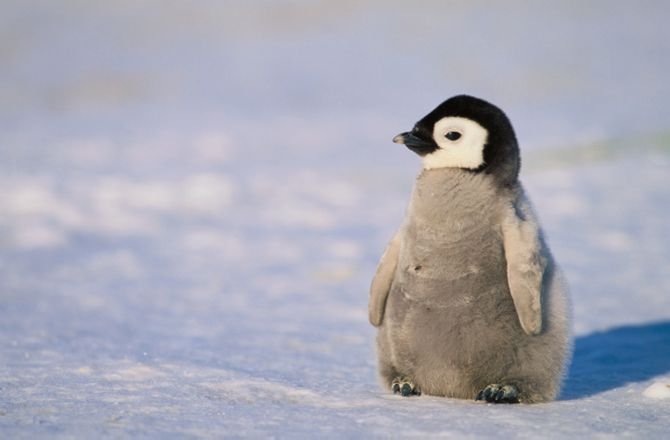
Penguins are some of the most fascinating birds on Earth. They cannot fly through the air, but they are incredible swimmers, excellent divers, and highly adapted to life in cold and challenging environments.
Although many people associate penguins only with Antarctica, penguins actually live in several parts of the Southern Hemisphere, from icy polar regions to surprisingly warm coastal areas.
Here are some amazing facts about penguins that show just how extraordinary these birds really are.

1. Penguins Are Birds
Penguins are birds, even though they look very different from the birds we usually see.
They have feathers, lay eggs, breathe air, and share many characteristics with other birds.
Their wings, however, have evolved into powerful flippers designed for swimming rather than flying.
2. Penguins Cannot Fly
Penguins are one of the best-known groups of flightless birds.
Instead of using their wings to fly through the air, they use them to “fly” through water.
Their streamlined bodies and stiff flippers allow them to move rapidly underwater.

3. Penguins Are Excellent Swimmers
Penguins can be incredibly fast and agile underwater.
They use their flippers for propulsion and their feet and tails for steering.
Their streamlined shape reduces resistance, allowing them to chase fish and other prey efficiently.
4. Some Penguins Can Dive Deep
Penguins are remarkable divers.
Emperor penguins are particularly impressive and can dive to depths of more than 500 meters.
They can remain underwater for around 20 minutes during some dives, although typical dives are often shorter.
5. Emperor Penguins Are the Largest Penguins
The emperor penguin is the largest living penguin species.
Adults can reach around 1.2 meters (4 feet) tall and can weigh considerably more than smaller penguin species.
Their large bodies help them retain heat in the extreme Antarctic environment.

6. Little Penguins Are the Smallest
At the opposite end of the size scale is the little penguin.
These penguins are only around 30–35 centimeters tall.
They are sometimes called fairy penguins and are found mainly around Australia and New Zealand.
7. Penguins Have a Special Body Shape
Penguins have compact, streamlined bodies.
Their shape allows them to move efficiently through water while minimizing drag.
Their bodies are much better adapted for swimming than walking.
8. Their Feathers Keep Them Warm
Penguin feathers are short, dense, and tightly packed.
They form an insulating layer that helps keep cold water away from the skin.
Penguins also have a layer of body fat that provides additional insulation.

9. Penguins Have Waterproof Feathers
Penguins regularly maintain their feathers through a process called preening.
They spread oil from a gland near the base of their tail over their feathers.
This helps maintain feather condition and water resistance.
10. Penguins Have a Thick Layer of Fat
Many penguins have a layer of body fat beneath their skin.
This helps provide insulation in cold environments.
It also serves as an energy reserve when food is scarce.
11. Penguins Have a Countercurrent Heat Exchange System
Penguins have specialized blood vessels in their legs and feet that help reduce heat loss.
Warm blood traveling toward the feet can transfer heat to colder blood returning toward the body.
This allows penguins to keep their core temperature stable while standing on cold surfaces.